
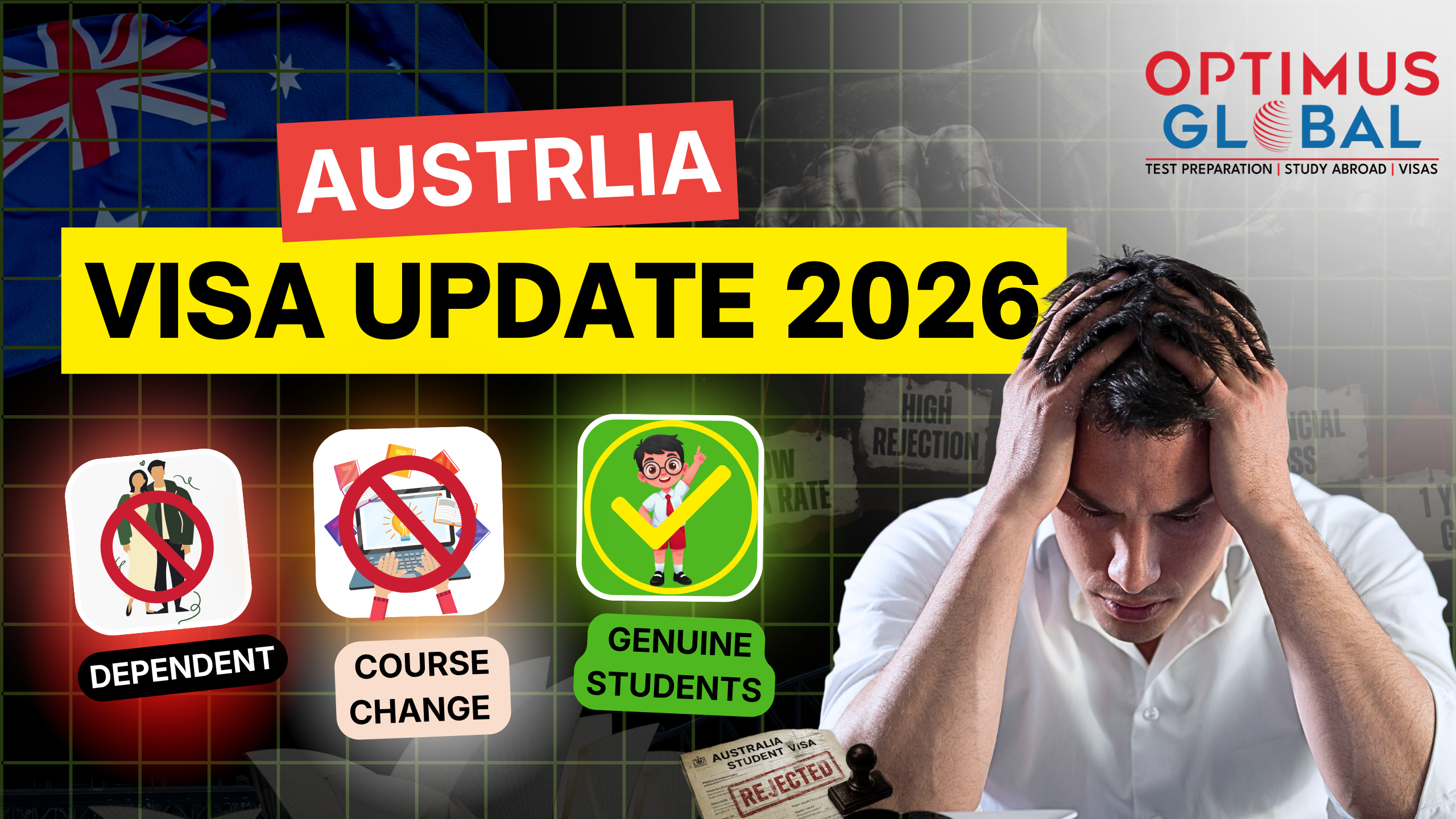
Australia Student Visa Changes 2026: What International Students Need to Know
Australia has announced important Australia student visa changes 2026 affecting dependants, course transfers and progression between qualifications. The announcement was made by the Minister for Home Affairs on 17 September 2026 as part of a wider migration reform package.
The changes are significant, but students and families should read the announcement carefully. They are not the same as a fully implemented law. The official speech describes what the Government intends to do, while the accompanying media release confirms the broad policy direction. At the time of writing, the Department of Home Affairs has not published a complete commencement date, legislative instrument or detailed eligibility schedule for every measure discussed.
This means the safest advice is to distinguish between announced policy,rules already in force, and details still awaiting implementation.
1. Australia announces new restrictions on student visa dependants
The Minister stated that Australia will no longer generally allow family members to be attached to international student or graduate visas. The stated policy is that most students will not automatically be able to bring a spouse, partner or dependent child under the existing family-member arrangements once the new rules commence.
However, the announcement also expressly referred to exceptions. It said that special visa conditions will continue to allow family members for Pacific and ASEAN nationals, and for certain courses, giving PhD courses as an example.
This should not be simplified into only PhD and Master’s by Research students are exempt. The official announcement does not, by itself, provide a complete list of exempt courses, nationalities, qualification types, evidence requirements or transitional dates. Students should wait for the Department of Home Affairs to publish the detailed rules before treating any particular course or passport nationality as automatically eligible.
What has been announced, and what is not yet confirmed?
| Issue | Position on 18 September 2026 |
|---|---|
| General policy direction | Restrict family members on most international student and graduate visas |
| Mentioned exceptions | Special conditions for Pacific and ASEAN nationals and certain courses, including PhD courses as an example |
| Dependants already attached and already in Australia | The Minister said families already here will not be broken up and existing arrangements will remain as they are while they stay, unless they later become entitled to a permanent visa |
| Students who hold a visa but have not travelled | The announcement does not clearly set out every transitional case; check the instrument and Department guidance before travel or adding a dependant |
| Commencement date | Not confirmed in the official announcement reviewed for this article |
| Full eligibility schedule | Pending further Home Affairs guidance |
For a new applicant, the practical question is no longer simply whether a partner or child is included on the application. The applicant must first establish whether the relevant nationality, course and visa pathway falls within an officially preserved exception.
A married student planning a coursework Master’s should not assume that a spouse can accompany them. A student considering a PhD should also not assume approval is automatic; the course must be genuine, the student must satisfy all visa criteria, and the final dependant rules must be checked after publication.
2. Course-swapping, progression and the new visa-hopping focus
The announcement separates three different situations: an extension, a course transfer and progression to a further qualification. That distinction matters for anyone considering an **Australia course change student visa** strategy.
An extension may be needed when a student cannot complete the course within the original period for an accepted reason, such as serious illness, or when an education provider closes and the student needs time to move to another provider. The Minister said this 12-month extension process is unchanged. [1]
A transfer is different. It may involve changing to another course after beginning study, including a change at the same institution or at the same qualification level. Under the announced policy, this type of transfer would require a new Student visa application so that the Department can assess whether the change is legitimate. The Minister described this as different from the more serious visa-hopping problem.
Progression means completing one qualification and moving to another. The announced rule is that students may move up the qualification scale, but not use repeated movement up and down between courses and providers as a migration strategy. The Minister gave the example that moving from a bachelor’s degree to a master’s degree is upward progression and would be acceptable under the proposed approach.
How this relates to condition 8202
Student visa holders must continue to comply with their individual visa conditions. Condition 8202 is the key condition associated with meeting course requirements. Students should check their actual conditions in VEVO and follow their provider’s advice about enrolment, attendance, academic progress and any proposed course change.
The announced reforms do not mean that every provider change is automatically prohibited, nor do they mean that every new visa application will be refused. They mean that students should not treat a Student visa as a general-purpose pathway for repeatedly changing study plans.
Before changing course or provider, verify:
- whether the new course is registered and suitable for the Student visa;
- whether it is at the same, higher or lower Australian Qualifications Framework level;
- whether credits will be recognised;
- whether a new Confirmation of Enrolment is required;
- whether a new Student visa application is required;
- whether the change remains consistent with the student’s academic history and career plan; and
- whether the change could affect visa compliance, finances or future applications.
A move from a bachelor’s or master’s course to a lower-level VET qualification deserves particular caution. The announcement specifically targets downward and repeated progression patterns associated with a migration outcome rather than an educational outcome. Do not make such a change without written advice from the provider and appropriately qualified immigration professionals.
3. The Genuine Student requirement remains central
The Australia Genuine Student requirement applies to student visa applications lodged on or after 23 March 2024. Applicants must be genuine applicants for entry and stay as students and must demonstrate that studying in Australia is the primary reason for applying.
The Department assesses the whole application rather than applying one automatic rejection rule. It considers matters such as:
- the applicant’s current personal, family, community and economic circumstances;
- previous study, qualifications, study gaps and course changes;
- knowledge of the proposed course, provider and life in Australia;
- how the course relates to past or proposed employment;
- the expected value of the qualification to future employment;
- immigration and travel history, including previous refusals or cancellations; and
- evidence supporting the applicant’s statements.
A future intention to seek an eligible post study or permanent pathway does not automatically count against an applicant. The central question is whether the person genuinely intends to study and can show a credible connection between the course, background and future plans.
For that reason, unexplained course changes, inconsistent academic choices, weak financial evidence or a pattern of visa applications can create questions. They do not mean refusal is automatic. Each application is assessed on its own circumstances.
4. Why is Australia making these changes?
The Government says the reforms are intended to improve migration-system integrity and give Australia greater control over who arrives and who remains. The official media release refers to stopping visa hopping, restricting secondary applicants on most student visas and strengthening compliance.
The Minister also explained that Australia wants to distinguish legitimate education and migration journeys from cases where a person repeatedly changes visas or courses mainly to extend their stay. The Government’s stated objectives include reducing misuse of temporary visas, discouraging non-genuine enrolment, improving compliance and protecting the reputation of Australian international education.
This should not be described as Australia closing its doors. The Department of Education continues to describe international education as a high-value sector and provides support for future, current and graduating international students. [5] Genuine students can still study at Australian universities, VET providers and research institutions, subject to the rules in force when they apply.
What do the Australia student visa new rules 2026 mean for Nepali students?
Scenario 1: A single Nepali student applying for a bachelor’s degree
A single applicant may still apply for a bachelor’s course, but should choose the course because it matches genuine academic and career goals. Before applying, verify the provider, entry requirements, finances, English evidence, Genuine Student responses and current dependant policy. A later plan to bring family should not be assumed.
Scenario 2: A married Nepali student planning a coursework Master’s
The student should treat dependant eligibility as uncertain unless an official exception clearly applies. The 17 September announcement mentions special arrangements for Pacific and ASEAN nationals and certain courses; it does not confirm that an ordinary coursework Master’s is exempt. Check the final rules, commencement date and transitional provisions before paying deposits or making family travel plans.
Scenario 3: A Nepali student considering a Master’s by Research or PhD
Research students should verify whether their exact course is within the final exempt category. The ministerial speech mentions PhD courses, but that statement is not a substitute for the final legal criteria. The student must still satisfy the Genuine Student requirement, financial and health criteria, and all other visa requirements.
Scenario 4: A student already in Australia changing institution or course
Do not withdraw from the current course or start a new one until the provider and Home Affairs requirements are checked. A new visa application may be required under the announced transfer policy, even where the new course is at the same level. Condition 8202 and any individual visa conditions must continue to be followed.
Scenario 5: Moving from a bachelor’s or master’s course to a lower-level VET course
This is a high-risk planning decision because the announced reforms specifically target downward progression and repeated course changes associated with visa hopping. The student should obtain a written academic rationale, confirm the AQF level, assess visa requirements and understand the effect on future applications before proceeding. No adviser can guarantee approval.
Are current students affected?
Students already in Australia: the announcement indicates that existing families already in Australia will not be separated by the new dependant policy. Course-transfer and progression changes may still matter when the student seeks a new visa or changes study plans, but implementation details remain pending.
Dependants already in Australia : the Minister said their existing arrangements will stay as they are while they remain in Australia, unless they later become entitled to a permanent visa. Verify any future visa application separately.
Students who already hold visas but have not travelled: the announcement does not provide a complete answer for every case. Confirm whether the visa was granted with family members attached, whether travel has occurred and whether the new rules have commenced before making arrangements.
New Student visa applicants: expect closer attention to dependant eligibility, course logic, finances, immigration history and Genuine Student evidence.
Future applicants: do not rely on media summaries. Check the latest Home Affairs guidance and the Federal Register of Legislation once the commencement instrument is published.
Should you still study in Australia?
Australia remains a major international education destination with universities, vocational programs, research opportunities and post-study possibilities. The main change is that students now need stronger planning before they apply.
Choose a course based on your genuine academic and career goals rather than assuming that you can easily change courses after arriving. Understand the course progression pathway, AQF level, tuition and living costs, visa conditions, Genuine Student requirement, dependant eligibility and career relevance before lodging an application.
Key Takeaways
- Australia announced major student and graduate visa reforms on 17 September 2026.
- Most international students are expected to face new restrictions on attaching family members, subject to special conditions and final implementation rules.
- The announcement mentions Pacific and ASEAN nationals and certain courses, including PhD courses, as exceptions. It does not yet publish a complete exemption schedule.
- Families already attached to a visa and already in Australia are stated to be protected from being broken up under the announced dependant policy.
- Many course transfers are expected to require a new Student visa application once implemented.
- Progression from a bachelor’s to a master’s is the type of upward progression described as acceptable; downward or repeated progression may attract scrutiny.
- Condition 8202 and all individual visa conditions continue to matter.
- Genuine Student assessment is individual and evidence-based, not an automatic rejection mechanism.
- Nepali students should confirm the current legal position before selecting a course, paying a deposit or planning family travel.
FAQ
1. Can international students still bring their spouse to Australia in 2026?
The Government has announced restrictions on attaching family members to most international student and graduate visas. Special arrangements are expected for some Pacific and ASEAN nationals and certain courses, including PhD courses as an example. The full eligibility rules and commencement date have not yet been confirmed.
2. Can Nepali students take dependants to Australia?
Nepali students should not assume that dependant eligibility remains available for every course. The official announcement mentions Pacific and ASEAN nationals, but it does not clarify every nationality category or publish the final criteria. Check the Department of Home Affairs guidance before applying.
3. Can Master’s students bring their spouse to Australia?
A coursework Master’s student should not assume that a spouse can be included under the announced rules. Research-course exceptions may be treated differently, but the exact course categories and requirements remain subject to official implementation guidance.
4. Can PhD students bring dependants to Australia?
The ministerial speech identifies PhD courses as an example of a course for which family may continue to be allowed. Eligibility is not automatic. Confirm that the exact course and visa application meet the final Department requirements.
5. Can I change my course after arriving in Australia?
A course change may be possible, but the announced policy indicates that many transfers will require a new Student visa application. Continue complying with condition 8202 and obtain advice before stopping or changing enrolment.
6. Do I need a new student visa if I change my course?
Under the announced reform, a transfer to another course may require a new Student visa application, including some transfers at the same level. The final implementation rules will determine the exact cases.
7. What happens if I move to a lower AQF-level course?
A move to a lower AQF level may be inconsistent with the announced progression direction and could receive additional scrutiny. Verify the AQF level, visa consequences and academic rationale before making the change.
8. What is the Genuine Student requirement?
It is the requirement that a student visa applicant genuinely intends to study in Australia and understands that study is the primary reason for the visa. Home Affairs considers personal circumstances, previous study, course value, immigration history and supporting evidence.
9. Are students already in Australia affected by the new rules?
The Minister said families already attached to visas and already in Australia will not be broken up under the new dependant policy. Other effects, especially for future course changes or visa applications, depend on the final implementation rules.
10. When will Australia’s new student visa rules start?
The Australian Government has announced the change, but students should check the latest Department of Home Affairs guidance for the confirmed commencement date and detailed eligibility requirements.
Optimus Global CTA
Planning to Study in Australia?
Australian student visa rules are changing, and every student’s situation can be different. Before choosing your university, course or intake, get your academic profile reviewed by the experienced counselling team at Optimus Global.
Our services include Australia study counselling, university and course selection, profile assessment, application assistance, student visa guidance, documentation support and Genuine Student preparation guidance.
Book your FREE Australia study counselling session with Optimus Global.
Optimus Global – Kathmandu
Putalisadak, Way to Dillibazar, Kathmandu, Nepal
Phone: 9851310002 / 9761793295
Email: [info@optimusglobaledu.np](mailto:info@optimusglobaledu.np)
Website:[www.optimusglobaledu.com](http://www.optimusglobaledu.com)
Study destinations: Australia | UK | USA | Canada